It seems fitting that I read The Amalfi Curse by Sarah Penner this year, as I went to Italy a few months ago. I have read a majority of Sarah Penner’s books, including her short novella The Conjurer’s Wife,which was meant to act as a link to The Amalfi Curse. Sarah Penner’s books are a combination of historical fiction and fantasy, and every time I read her books, I feel like I’m transported into whatever setting the book takes place in. The Amalfi Curse might be my favorite Sarah Penner book I have read thus far.
Haven Ambrose is a nautical archaeologist currently on site in Positano in Italy. She is investigating a ship wreck, and based on her father’s research, she believes there might be treasure there. Interwoven with Haven’s story, Mari DeLuca comes from a line of stregheria or sea witches. After a corrupt man kidnaps members of Mari’s family, Mari knows she has to use her powers to save and protect those she loves. Haven and Mari’s stories are connected as Haven reads about Mari’s story and what that means for her research in the present day.
When I read Haven’s story, it reminded me a lot of Lara Croft. The archaeological research Haven does and the relationship she has with her father were the first things I thought of when I read this book. Mari’s story was fascinating, and I liked reading about the relationship she has with her abilities and how it was different than that of her relatives and friends. Mari experiences more turbulence in her story than Haven does, but I feel like there are similarities between the two women’s struggles, even though their stories are two centuries apart.
The only thing I would have wished for is that this book had tied into The Conjurer’s Wife. If it did, it was subtle enough that I missed it. It would have been neat to see the two be related to each other in some way.
I liked The Amalfi Curse. The setting was pretty, and I liked the characters and reading their perspectives. I rated The Amalfi Curse by Sarah Penner four stars on Goodreads.
I am a part of four different LARP (live action role-playing) Discord groups at the moment. I had been meaning to go to a LARP, but every time I put the event on my calendar, something else would come up and I’d have to miss it. Last month, I was able to dedicate the time, and I went to my first LARP session! I wasn’t sure what to expect or if I would like it, but I ended up having a blast. I wanted to share a little bit more about what LARPing is, the game that I played, and the character I created.
LARP stands for live action role playing. Essentially, I’d describe LARP as playing a TTRPG, but instead of rolling dice, you act out what your character does. Players can set up objectives that they want their characters to meet and interact with other players through their characters. Gamemasters exist in LARP, and they come up with different events that all players can partake in. This is an over-simplified explanation of LARP, and as someone who has only LARPed once, it’s less of a refined definition and more of how I can explain LARP in my own words.
The LARP I went to was for the game Wraith: The Oblivion. Wraith: The Oblivion is a World of Darkness game, which may sound familiar as it exists in the same world as Vampire: The Masquerade. In Wraith, players play as ghosts who died in the mortal world and now exist in this darker underworld. Depending on how players died, players are sorted into legions. There’s a legion consisting of ghosts who died of old age, or those who died from acts of violence, or those who don’t remember how they died. There’s a mystery to it as to why your character didn’t move on after death. Why are they still here, and what do you hope to accomplish throughout the game? This was my first time playing Wraith, as I had heard about the game before, but hadn’t had a chance to play.
My character is named Mia. She was an emergency room nurse who remembers leaving work, but then she wakes up in the underworld. She was told that she had died, but she simply doesn’t remember what happened to her. Mia belongs to the Legion of Paupers, meaning a ghost who doesn’t remember what happened to her. How does Mia find purpose in her existence? I liked the idea of her finding value in her career and what that would mean for her as a character. I thought it was an interesting contrast for someone to believe in science and reason, and now has to think about things differently. On top of that, I wanted to make her death a mystery. I thought it would be easier to roleplay since I don’t know as much about Wraith’s gameplay mechanics.
Before the game, I was chatting with one of the storytellers on Discord. They helped share tips for crafting a character while also giving me space to come up with something on my own. When I arrived at where the LARP was held, that same storyteller helped me fill out my character sheet. For someone who had no idea how to play the game, I liked that someone took the time to walk me through it all. After that, I was partnered with another storyteller. We had a conversation in which Mia woke up in a darker emergency room of sorts, where she was told that she had died. After Mia got the rundown of the world, she was led by the storyteller to where the other players were.
I was a little nervous, because I didn’t know everyone there. There were two people whom I had played Vampire: The Masquerade with before, so not total strangers, but the idea of going up to people in character was a little intimidating. I was pleasantly surprised at how easy it was. All of our characters were talking with each other, and time passed quickly. The session was four hours in total, and I didn’t find myself bored or losing interest. After the session ended, it was clear that Mia had plot points and things she wanted to accomplish in the next session.
My first LARP was a positive experience! I want to try out some of the other LARPs in the Twin Cities area, but this one will be one I want to continue with. I am proud of myself for trying something new and putting myself out there. While I go to conventions by myself, it’s something I feel comfortable with, and LARP was new. I can’t wait to LARP in the future, and maybe I’ll come in costume next time.
It seems that The Fantastic Four have been difficult to adapt to a movie. Personally, I didn’t think the early 2000s Fantastic Four films were that bad. They were cheesy, sure, but I think there were far worse superhero movies than them. There was that one reboot, which I’m not even going to bother looking up. Now, Marvel has finally decided to take on the Fantastic Four, so they can be incorporated into their cinematic universe. It makes sense; the Fantastic Four are a huge part of the comics and the Avengers’ storylines in particular. The Fantastic Four: First Steps was excellent and has a unique approach to the superhero franchise.
The Fantastic Four: First Steps follows the Fantastic Four, comprising Sue Storm (played by Vanessa Kirby), Reed Richards (played by Pedro Pascal), The Thing (played by Ebon Moss-Bachrach), and Johnny Storm (played by Joseph Quinn). They have been established superheroes for a few years, and the world has grown to love them. During the evening, Earth is visited by the Silver Surfer (played by Julia Garner), and she warns Earth that Galactus is coming for them. The world looks to the Fantastic Four, who fly off into space looking for Galactus and hoping to stop them. When Galactus asks for something that the Fantastic Four can’t give, they rush back to Earth and try to figure out how they will protect the planet.
If you’re going into The Fantastic Four: First Steps hoping for some action-packed fight scenes, you might be disappointed. At the center of this film is science, and using science to solve a problem. I think it’s endearing that the Fantastic Four genuinely do not know what they are going to do. The world looks to them to fight everything, but it also makes this movie more real that the heroes don’t know what to do. After watching Superman recently, I feel The Fantastic Four: First Steps offers a different approach to superhero films.
One thing that I feel this movie captures that previous Fantastic Four films did not was the importance of family. Sue realizes that Galactus wants her child and refuses to give him up. She speaks to Earth in an eloquent speech that she will protect her son, but she will also protect them. The last half of the movie, when Sue is fighting Galactus, and it’s clear that she is motivated to protect her son, I was getting emotional. To be fair, I cry at most movies, but I think it speaks to a mother’s love for her child.
I’m glad that this movie wasn’t terrible. Similar to Superman and how James Gunn had a lot riding on this, I’d say there was a lot on Marvel for making this movie good. Fantastic Four has been all over the place, so I’m glad to see that it is possible to make a great adaptation for the Fantastic Four. This movie also sets up Avengers: Doomsday, and I’m excited to see the Fantastic Four appear with the other heroes.
Several weeks ago, Badwolf Adventure Studios hosted a Daggerheart one-shot utilizing one of the campaign frames from the rulebook. I played Daggerheart once last year before the game’s release. I haven’t played it since the beta and was curious if there were any substantial differences. I was also watching Age of Umbra, which is Critical Role’s shorter series taking place in another campaign frame from the book. In the past, I expressed skepticism about the gameplay, specifically with the lack of initiative order and how rolling with d12s would work. I’m happy to say that I am impressed with Daggerheart as a system and I’d join a campaign if I had the opportunity to do so.
In our one shot, we had seven players. It was nice to see a full table of other players who were curious to see how Daggerheart would run. I ended up playing a Faun Ranger with the Beastbound subclass. This let me choose an animal companion. As a side note, you will never catch me having an animal companion in Dungeons & Dragons. Why? I would be emotionally destroyed if my animal companion were to die in combat. In Daggerheart, when the animal companion loses its health, it doesn’t die. Instead, it becomes stressed, either running away in combat entirely, hiding, or taking another action. At rest, the player can choose to clear stress, and if so, the animal companion comes back. This is perfect. It lets the Ranger class shine, but also allows players to have the comfort of knowing that the animal they choose will never die.
The Ranger in Dungeons & Dragons is notorious for not being as powerful as the other classes. I think it’s a shame, really. In Daggerheart, the Ranger has vastly improved. There are abilities that the Ranger can initiate, which include the animal companion. In our group, I had a robotic tiger named Petunia, and she could benefit from some of my Ranger abilities. I think that’s rad. There’s nothing more fun than sending a robotic tiger in to do some work. After our session, one of the players also commented on how much fun the Ranger was and how they would consider playing the class next.
In Daggerheart, there were two things I was skeptical about. The first being a lack of initiative order. During combat, players decide who goes first, and once a player rolls with fear, the GM goes next. Our group did a great job at asking other players who haven’t gone for a bit that they should take their turn next. Our group had seven players, so it’s easy for one person to accidentally dominate the game. With that said, our GM was great, and he queued players up as well, so they could take their turns. The overall gameplay experience was seamless.
The other thing I was skeptical about was rolling two d12s, one representing hope and the other fear. Our group, for whatever reason, always seemed to roll higher in fear. The GM could have wrecked our group, but chose not to. With this being a one-shot, I don’t think it was the GM’s goal to kill our characters. For Daggerheart campaigns, I think it’s important to settle on a difficulty level. Do players want an easier game or a tougher campaign? I think this would dictate how the GM spends fear based on what the players want. This was something I was nervous about, but in the two times that I have played Daggerheart, it was a non-issue.
Daggerheart has been a fun game to play. I’m curious to see what else is developed alongside the system. I wanted to give a special shout-out to Jordan from Sortilege, who was our GM for the game. He did a great job at keeping all seven of us on track. If Badwolf Adventure Studios decides to do more Daggerheart one-shots in the future, I will definitely be there.
While August is still technically summer, I long for fall. I can’t wait to drink apple cider, go to a pumpkin patch or haunted house, and I love going on walks. During these months, I try to read darker thrillers, horror, fall-themed romances, or any other book that relates to the upcoming season. Instead of writing a TBR post for August, September, and October, I’m going to simply list which books I want to read for these months. On average, I read two physical books a month, so this list will have seven books spread out over three months. If I read more than that, good for me! I wanted to make this list manageable. Here is everything I want to read in the next few months.
Lovecraft Country by Matt Ruff
Haunted Ever After by Jen DeLuca
The Warm Hands of Ghosts by Katherine Arden
The Honey Witch by Sydney J. Shields
One Dark Window by Rachel Gillig
The Spellshop by Sarah Beth Durst
The Crescent Moon Tearoom by Stacy Sivinski
Lovecraft Country is the book I have had on my TBR shelf for the longest, so this is the book I’m starting with. The Lovecraft Country show is amazing, so I wanted to go back and read the source material. Haunted Ever After is a romance written by Jen DeLuca, who writes the Renaissance romance series I adore. Haunted Ever After is a romance set in a small town in Florida that prides itself on the ghost tourism the town attracts. The Warm Hands of Ghosts is a historical fiction ghost story taking place in World War I. The Honey Witch, The Spellshop, and The Crescent Moon Tearoom are cozy fantasy books that I think will be a joy to read when fall arrives. Finally, One Dark Window is a gothic, dark fantasy book. I have seen everyone online raving about One Dark Window, so I’m intrigued to see what it’s about.
Normally, I don’t share which audiobooks I’m listening to, but I will make an exception in this case. I have five audiobooks on hold, with two of them fitting the theme for these months. The first is The Only One Left by Riley Sager. I have read two Riley Sager books and enjoyed them. I skipped past Riley Sager books due to reading some negative reviews, but I wanted to try to get back into his books. In The Only One Left, Kit McDeere is taking care of Lenora Hope in the 1980s. Lenora was accused of murdering her family in 1929. Lenora denies any involvement, and Kit is determined to figure out the truth. The second audiobook I have on hold is Witchcraft for Wayward Girls by Grady Hendrix. Grady Hendrix has been a hit or a miss for me. While I loved Southern Book Club’s Guide to Slaying Vampires, I wasn’t a fan of We Sold Our Souls. Grady’s book premises always intrigue me, and this book is no exception. Witchcraft for Wayward Girls takes place in a house for girls who grew up too fast in the 1970s. One of the girls arrives at the house as she is pregnant. The girls discover that they may be able to perform witchcraft. This is the first Grady Hendrix novel I will read as an audiobook. My queue positions for both of these books are quite long, so, likely, I won’t read them in time, but with that said, I will listen to them eventually.
I am looking forward to reading or listening to these books! I think there’s enough variety to keep me interested throughout the months.
I was scrolling on Instagram as one does, and I saw news that The Love Hypothesis by Ali Hazelwood was being adapted into a movie. I read The Love Hypothesis in 2021 when it was released, and loved it. Ali Hazelwood is one of my favorite authors, and I have enjoyed every book she has written. To say that I was excited for the film adaptation would be an understatement. The cast was also revealed, with Lili Reinhart posting on Instagram with The Love Hypothesis. Lili is playing Olive while Tom Bateman is playing Adam Carlsen. I can’t wait for this movie.
The Love Hypothesis was inspired by a Reylo fan fiction story. For those who have no clue what that means, Reylo fan fiction is short stories where Rey and Kylo from Star Wars end up together. I’m not here to shit on what other people love, but I am not a fan of Reylo. Kylo Ren is not a good person, and I find Reylo fan fiction glosses over all the evil atrocities Kylo’s done. If there were any Star Wars fan fiction that I’m in favor of, it would be Finn and Poe. Anyway, reading The Love Hypothesis and the way the characters are described, Olive has brown hair, and Adam is tall, dark, and broody. This tracks considering what I just said.
Interestingly enough, Tom Bateman is married to Daisy Ridley, who played Rey in the films. With The Love Hypothesis’s origins, I find it hilarious that Tom is playing Adam and is married to Daisy in real life. I have no idea if that played a role in Tom Bateman getting the part of Adam, but that feels too perfect to me. The other ask I’d like from this movie is for Adam Driver to have a cameo. I don’t care where he is in the movie, but he needs to be there. The budget for the film may not be able to afford Adam Driver, but I think it would make the film even better. Quite frankly, throw Daisy Ridley into this, too. It wouldn’t be too much to ask, considering her husband is one of the leads.
I don’t think I have been this excited for a book-to-movie adaptation in a long time. The Love Hypothesis absolutely deserves a movie, and I cannot wait for this movie to have a release date.
Six Scorched Roses by Carissa Broadbent is a short novella that takes place in the Crown of Nyaxia / Obitraes world. Obitraes is the main setting of the Crown of Nyaxia series, which is a series that I love. It’s vampires with wings, what is there not to love? With the Crown of Nyaxia books and romantacy books in particular, they tend to be hundreds of pages. Six Scorched Roses is 187 pages and takes place between Serpent & The Wings of Night and The Ashes & The Star Cursed King. For being less than 200 pages, Six Scorched Roses has no business being as good as it is.
Lilith is dying. Her town of Adcova was stricken with a plague by Vitarus, the god of abundance and famine. Lilith is desperately trying to find a cure for the plague to save her sister, Mina. Lilith stumbles upon Vale, a vampire from the House of Night. He agrees to give her his blood, and Lilith provides him with roses in return. Vale is intrigued by Lilith and eventually agrees to loan her his research and other academic books. Lilith faces a challenging concept: she knows how dangerous Vale is, but she needs him, and Vale comes to terms with the fact that he needs her, too.
I flew through this book. I felt the pacing was fast, and everything was set up quick. Lilith and her disease, meeting Vale, asking for Vale’s help, moments where Lilith and Vale started to fall for each other, Lilith and Vale hooking up, and eventually, Lilith risking everything to save her sister. This book didn’t waste any time, and everything was succinct. For Lilith and Vale, I thought they had great chemistry together. I didn’t find the story to be rushed; instead, any extra scenes were cut, and it showed only what was needed to. I liked Lilith as a character. She’s a scientist by heart and dedicated to her cause. Vale was moody and lonely, and Lilith brought out things in Vale that he had long since buried. I wouldn’t mind reading other novellas starring Lilith and Vale throughout the moments of the Obitraes books.
I have no notes; this book was everything I needed it to be. I’d love to see more authors writing shorter novellas set in their fantasy worlds. Not everyone has the time to read hundreds of pages. I rated Six Scorched Roses by Carissa Broadbent five stars on Goodreads.
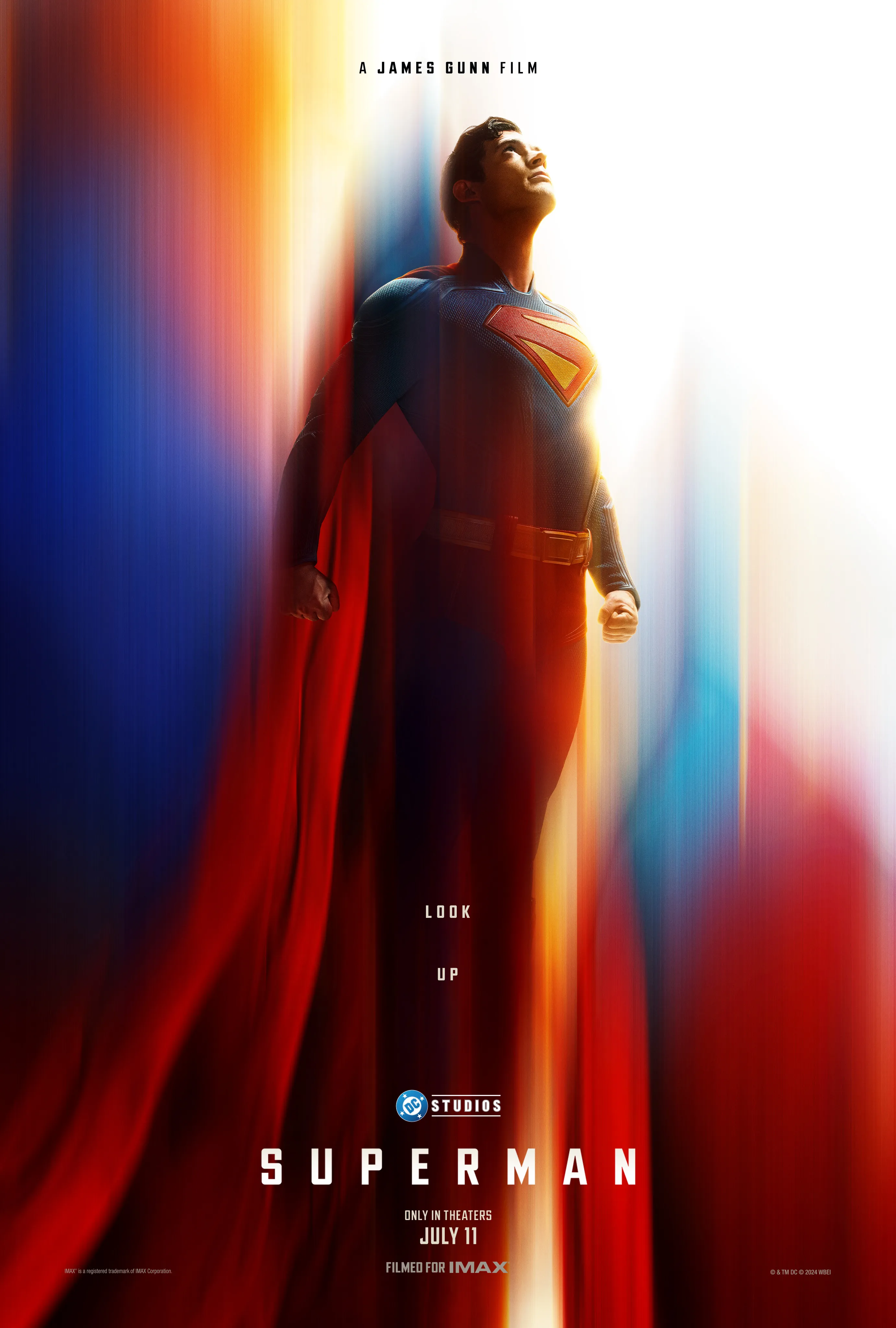
I remember watching Man of Steel the summer after my first year of college. I didn’t mind the movie, but a common critique I saw online was that Man of Steel didn’t feel like a Superman movie. There were discussions about the tone of the film and how Henry Cavill’s suit was darker than the usual bright blue and red suit from the comics. As a comics fan, I like how each era of superhero films has its own take on the characters, and Man of Steel’s take was a grittier, more realistic superhero if Superman were to exist in the real world. James Gunn’s Superman film was under considerable pressure. If this film were bad, it would be a terrible way to launch his DC movie universe. It’s safe to say that Superman was a delightful take on the character, and I’d ride or die for Krypto specifically.
Superman (played by David Corenswet) revealed himself to the world three years ago. During a fight, Superman is defeated and crash-lands near the Fortress of Solitude. Saved by Krypto, Krypto drags him to the Fortress, where he’s exposed to the sun and is partially healed. Meanwhile, Lex Luthor (played by Nicholas Hoult) discovers the Fortress and gathers additional information about Superman that he can use to take him down. A video is revealed where Superman’s parents tell Superman to take over Earth. Superman feels he has no choice but to give himself up to Lex. Lex imprisons Superman in a pocket dimension where his true intentions are revealed, including helping to start a war in another country to make a profit and defeating Superman.
For the most part, I never had any doubts over the casting choices for this film. David Corenswet has the look of Superman, and I found he had natural chemistry with Lois Lane (played by Rachel Brosnahan). The only casting choice I was a little torn over was Nicholas Hoult. Granted, I thought Jesse Eisenberg was a mis-cast for Lex, so that set me up to be a little more picky this time around. With that said, Nicholas Hoult was phenomenal, and as soon as he threatened to kill Krypto, the whole theater gasped. How dare he kill Krypto. Nathan Fillion played Guy Gardner, and that bowl cut is horrendous, even though it’s comic book accurate. Mister Terrific (played by Edi Gathegi) played a huge role in this film and is instrumental in breaking Superman out of the pocket dimension. The cast made the movie as great as it was.
Let’s talk about Krypto. Krypto acts how you would think any dog with superpowers would act. During the climax of the film, there’s a scene where Krypto breaks into a pet food store and is eating biscuits and treats. How cute is that? There’s another scene where Krypto viciously attacks Lex, and Superman tells him to put him down. To be fair, Lex did imprison Krypto, karma is a bitch. It reminded me of the scene from The Avengers where The Hulk smashes Loki around. Krypto’s look is really scrappy. He isn’t this perfectly manicured dog; he looks like a dog you would adopt from a shelter. I like that a lot. Krypto is so well-loved that there was a 500% surge in dog adoption interest after the movie was released. Krypto was a highlight of this movie.
There were a few cameos throughout the movie that were fun. Peacemaker (played by John Cena) was being interviewed on TV. Rick Flag Sr. (played by Frank Grillo) is one of the political players that Lex talks to when trying to get approval to attack Superman. For those who haven’t watched Creature Commandos, Rick Flag was animated, but not seen in live-action.I think the most surprising or least expected was the appearance of Supergirl (played by Milly Alcock). James Gunn is working on the Supergirl film now, and I think Milly was a good choice to play the character. I love how she’s off partying in outer space, and Krypto is misbehaving because of that. It also means that Krypto could appear in her movie too, and I’m here for it.
Another thing I read online was how some people hated Superman because they felt it was “too woke”. First of all, I think it’s perfectly fine if some people (like myself) liked this movie and some didn’t. That’s a part of being a fan of anything. With that said, comics are political. I hate to break it to you, but comics have always had political messaging throughout. Captain America punching Nazis. The X-Men are fighting for mutant rights. Superman is an immigrant. I always laugh whenever I see this pop up again in various fandom spaces. Comics have always been political; hell, Star Wars has been political. If you didn’t notice the message, that’s on you because it’s always been there.
I would not want to be James Gunn. The amount of stress of trying to relaunch a movie franchise sounds awful. With that said, Superman was a solid start, and I thought it was worth it to see in theaters. It gives me hope that DC can finally have a successful and solid film franchise.
A Court of Mist and Fury is the second book in the ACOTAR (A Court of Thorns and Roses) book series. I read the first book, A Court of Thorns and Roses, in 2023 while I was in Europe. I liked it, but not enough where I wanted to rush into reading the second book. I was contemplating whether I wanted to continue the series, and shortly thereafter, I received the box set of the series from my father-in-law. If you’re wondering why my father-in-law reads a smutty fae series, his response would be, “None of the Amazon reviews told me this series was going to be so pornographic”. My father-in-law is not on BookTok / the book side of TikTok, so he was out of the loop. Anyway, he gave me the box set of the series that he bought, and here we are. I read A Court of Mist and Fury, and I feel like this book redeemed the series for me.
Feyre is trying to rebuild after what she endured under Amarantha’s wrath. She’s fae now, and she’s trying to understand what weight that carries. Tamlin has been pushing Feyre to get married, and her wedding date quickly approaches. Right away, she recognizes differences between herself and Tamlin, and when she walks down the aisle, all she wants is out. Sure enough, Rhysand hears this through their bond and whisks Feyre away from her wedding. In those weeks, Rhysand teaches her to read, and Feyre can take a breather. Through Rhysand, Feyre realizes that Tamlin has hidden so much from her and that a war is on the horizon.
A Court of Mist and Fury blows ACOTAR out of the water. This book was much more interesting. I liked reading about the Night Court and Velaris, this secret city that Rhysand protected. I liked hearing about Rhysand’s court, including Mor, Azriel, Cassian, and Amren. I would ride or die for Mor. Give Mor her own series! I found myself reading hundreds of pages in one sitting and getting completely lost in this portion of Prythian.
I liked Feyre more in this book than in ACOTAR. She seems to have matured, and I liked how she wanted to pursue knowledge. She saw through Tamlin, putting her in a box as a wife, and that’s it. Towards the end of the book, she knows what she must do and how she will try to fight back to save Prythian. Feyre grows a lot as a character throughout the book.
I can’t talk about this book without talking about Feyre and Rhysand. I don’t think I am as obsessed with them as other fans are. I think Feyre has been through so much, and it would be good for her not to be matched with someone else so quickly. I felt that throughout the book, it took away from their romance. I don’t mind them together. I wish Feyre had had moments on her own, and they would have gotten together in the third book.
With all that said, there were a few things I noticed that irked me. Can Sarah J. Maas, please stop using females and males in this series? I had to change this in my head to either lady, woman, or something else. I get it, fae aren’t human, so maybe woman or man isn’t correct, but female, really? There’s one quote where a character is describing losing the love of his life, and the quote says, “losing the female I love”. Am I the only one who doesn’t like this? I must be because I don’t see this mentioned in any other review I have read. Another thing I noticed was the description of Feyre being so skinny. Yes, her trauma is causing her to lose weight, and that’s accurate, but it was described enough where I’m like, okay, that’s enough.
The last thing I wanted to mention is the amount of sexual violence that is in these books. I have talked about including sexual violence in media before, specifically regarding Alan Moore. I can’t ignore this in Sarah J. Maas’s books. There’s one character who, in her backstory, is beaten because she was no longer a virgin. It’s not just this character; Feyre experiences her own abuse in ACOTAR. On top of that, it’s hinted at that in fae society, females (again, not my choice of words) are seen as lesser than and are there to provide pleasure to males. It gets to a point where this book and series teeters on the line of where this is a bit much. I felt this towards the end of ACOTAR with all of Amarantha’s trials and what Feyre has to go through. There are plenty of ways to build hardship into the women in your story without it being sexual violence. It seems like Sarah J. Maas relies on this as a plot device. I will be fully transparent in that I am sensitive towards sexual violence. If it’s in a book series, I tend to avoid that series altogether. I wonder if this is something that’s in every Sarah J. Maas series, or is it specifically in this one?
With all that said, this book was a page-turner. I am curious to see how this series plays out, especially with that cliffhanger at the end. I rated A Court of Mist and Fury three stars on Goodreads.
I have mentioned Twin Cities Geekthroughout my blog posts. Twin Cities Geek is an online magazine that’s local to the Twin Cities (Minneapolis and Saint Paul), along with the suburbs surrounding the cities. I started writing for Twin Cities Geek in 2015, and my first article was published on July 15th, 2015. I have written a few articles since then and have tabled at the Twin Cities Geek booth at a variety of different local conventions. I wanted to share how I started my journey writing for Twin Cities Geek and what writing for this online magazine has meant to me.
I found out about Twin Cities Geek through a random Facebook post. The post indicated that the website was looking for contributors. This wasn’t a paid gig, but volunteer writing experience. At this time, I had just launched Bizarre Brunette, and I was specifically looking for more ways to get my writing out there. The process was simple; I had to send a piece of my writing, so they could see what my style was. When remembering back to this moment, I can’t remember any more specific details. Once I sent everything in, I was given clearance to start picking what I wanted to write about.
When I initially became a contributor, I was going to write for the Fit Geek section. The Fit Geek Section is how fitness, exercise, and health can intertwine with geeky topics. I wrote for this section for a bit, but fell out of love with it. It’s hard to pinpoint an exact reason, but to summarize, I found a lot of toxicity within the health and wellness space, so writing for this section brought a lot of that up on my end. I moved into other categories, and now find myself writing about local businesses, reviewing books, and coming up with topics on a whim. Twin Cities Geek has opened my horizons as to what I like to write about, which is one thing I have learned from the last decade.
When I first started writing articles for Twin Cities Geek, they had to go through a ton of editing. I’m not even kidding, I had to rewrite whole sections. The editors were kind, but honest, and had a lot of good feedback for what I submitted. Throughout the years, my articles would take a lot of time to write with all the back and forth between the editors. Now, I can write an article, and maybe have to change one thing before it gets posted. It shows how my writing has gotten better over time. It’s funny, I’m going through and editing my older posts on Bizarre Brunette, and some of the posts are cringy. The way I wrote did not flow well, especially when I read the posts out loud to myself. I noticed how much better my writing is, and that’s because of Twin Cities Geek.
Reflecting on these past ten years with Twin Cities Geek, there’s a lot I want to say. Besides improving my writing, Twin Cities Geek has allowed me to table at conventions. I love tabling at conventions! It’s high energy, and a two-hour shift flies by. I enjoy talking to people who may be new to the Twin Cities area or are curious about geeky events that are happening. Another benefit of writing for Twin Cities Geek is that it’s a great resume builder. I have had job interviews ask me about Twin Cities Geek, and it has led to interesting conversations.
Writing for Twin Cities Geek is something I enjoy. It’s become a hobby of mine, and I continue to learn so much about writing and editing. Here’s to another ten years of writing!



 Bizarre Brunette