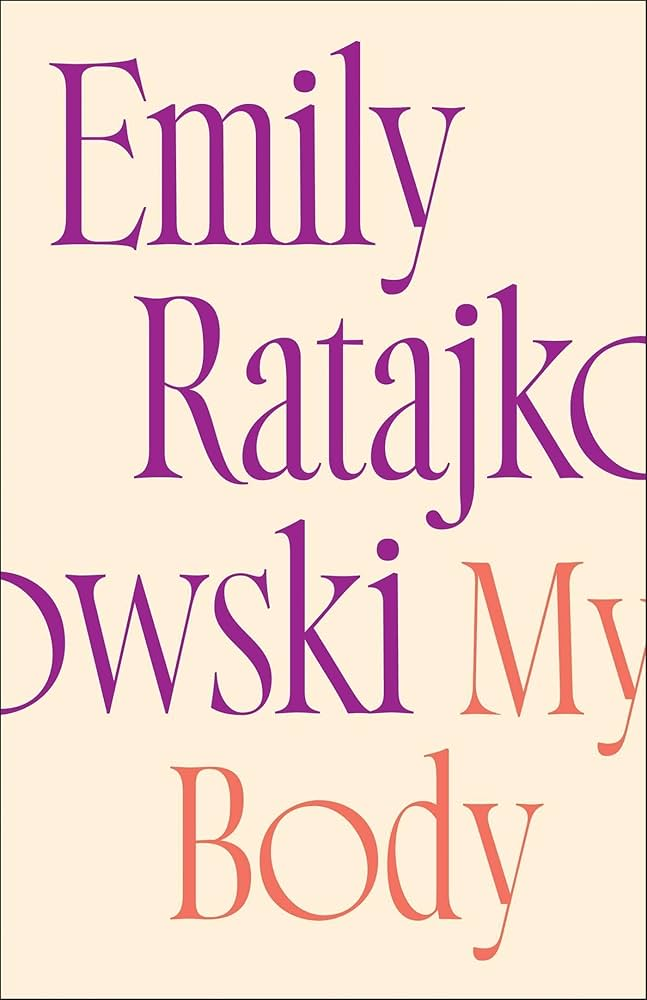
The music video for Blurred Lines came out in 2013 when I was a freshman in college. This was a moment in my life where me and my friends would blast music as we went out. This song climbed the charts at the time, but thinking about the song ten years later, I don’t consider it a memorable song. This song has been dissected in our culture today because of how gross the lyrics are and what they represent. The Blurred Lines music video made waves as one of the models, Emily Ratajkowski, was topless and dancing to music. This sparked discussion in later years as Emily talked about feminism and how she didn’t regret making the music video. Emily wrote the book My Body where she discusses her relationship with her body throughout her life.
There’s so much I want to say about this book. There’s a story Emily details in which she took naked photographs with a photographer before the Blurred Lines music video was released. At the time, she agreed to the shoot knowing the photos would only be used for a magazine spread. Years later, the photographer sold several art books of Emily’s naked body. When Emily went to sue the photographer, her lawyers told her it was fruitless since the photos were already out there and it would cost a lot in legal fees. This whole situation is icky. If you agree to do something under certain circumstances and someone violates that, I think that’s awful. I want to be clear, if the situation were reversed (a man agreed to naked photos and a woman sold art books of a man’s body without his consent) I would think this is equally bad. Another thing Emily talks about is how an agent can sign off on release papers for photos without getting a signature from a model. How is that legal? While Emily’s book doesn’t focus on this, the modeling industry is corrupt and we should protect models of all genders from this situation. I listened to the audiobook of My Body versus reading the physical book. I loved the audiobook. When Emily describes the above story, I can hear her voice crack. My heart breaks for her.
Another focus of the book is victim blaming. Emily lists some of the comments she received from both men and women. They blamed her for this. “Don’t pose naked if you don’t want to be taken advantage of”. “Don’t be a model.” “You knew what you were signing up for.” I think that commentary is sad. Shouldn’t we be united on this? All work industries should have protections in place for employees, why is modeling different?
Emily’s honesty throughout the book puts her in a vulnerable place. She talks about using her body for male validation and the attention she got in doing so. She talks about what this did for her career both positive and negative. There’s a quote from the book that sits with me. “I so desperately craved men’s validation that I accepted it even when it came wrapped in disrespect”. Let that sink in. Several quotes from Emily’s book are going to stay with me.
I could go on and on about this book, but I will say one last thing. I think it’s fascinating how our culture treats nudity. The fact that women are demonized for being naked, who cares? Why are some women respected and some women aren’t? I think this topic is interesting for both men and women. Are men treated the same way if they were naked? In some ways, I’d say yes in others, I’d say no. The first thing I thought of when I thought about male nudity was the Sex in the City movie that came out in 2008. In the movie, Gilles Marini plays Samantha’s neighbor and has a full frontal scene. I looked up Gilles’s career and after the movie came out, he had been in several TV shows, but nothing I recognized. Did nudity impact his career? If so, why is that the case? I think our culture, specifically in the US, treats nudity with disdain and I don’t get it.
I’m glad I listened to this. I liked Emily’s writing more than I thought I would. This would be a book I’d want to re-read in the future because there are so many things to take away from Emily’s experience with modeling and how her body was used against her. I think it says a lot about the culture we live in and while women are equal to men in some aspects, societal norms and rules still put women on a different level. My Body is a book I’d re-read in the next few years because it still is relevant in the world we live in.
 Bizarre Brunette